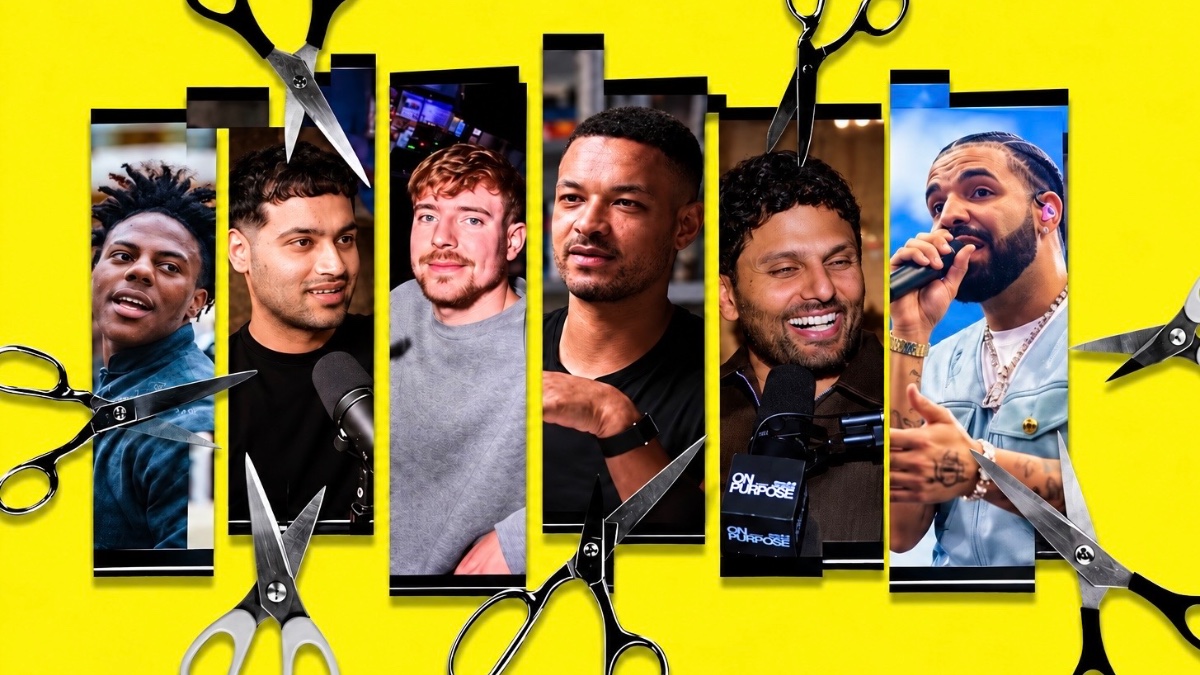
Clipping marketing turns existing video content into a distribution network. Instead of publishing a video on one brand account and hoping it reaches the right audience, brands work with independent creators who turn approved footage into short-form clips and distribute them across social media platforms.
For brands, agencies, artists, startups, and founders, a clipping marketing strategy creates more opportunities to reach new audiences, test creative angles, and extend the life of existing content.
This guide explains how clipping marketing works, how it compares with influencer marketing and paid advertising, how to plan a campaign, and which metrics matter when measuring performance.
What Is Clipping Marketing?
Clipping marketing is a content distribution strategy in which independent creators edit long-form or existing video content into short-form clips and publish them across platforms such as Instagram Reels, TikTok, and YouTube Shorts.
Depending on the campaign model, creators may be compensated through performance-based rewards, such as eligible views, or through other agreed payment arrangements.
Unlike traditional influencer marketing, where a brand typically pays a creator to produce sponsored content for their audience, clipping focuses on distributing existing content through multiple creators and accounts.
A single podcast, product demonstration, founder interview, livestream, music video, or campaign asset can provide material for multiple short-form videos. Each clip can use a different hook, editing style, narrative, or audience angle.
The objective is straightforward: turn content into distribution, and distribution into attention.
How Does Clipping Marketing Compare With Influencer Marketing, UGC, and Paid Ads?
Clipping marketing, influencer marketing, user-generated content (UGC), and paid social advertising serve different purposes. Choosing between them depends on whether a brand needs distribution, trust, creative assets, or targeted conversions.
Marketing channel | Primary objective | Typical execution | Best suited for |
Clipping marketing | Expand content distribution | Multiple creators publish short-form clips | Reach, awareness, creative testing |
Influencer marketing | Access creator audiences and credibility | Creators publish sponsored content | Trust, recommendations, niche communities |
UGC | Produce relatable creative assets | Creators make videos or images for a brand | Product pages, organic posts, ad creatives |
Paid social advertising | Reach selected audiences through paid placements | Brands run ads through advertising platforms | Targeting, retargeting, conversion campaigns |
Owned social media | Build a direct brand presence | A brand publishes on its own accounts | Community, retention, brand identity |
These channels are not mutually exclusive. A brand can use clipping to distribute founder interviews, UGC to create product demonstrations, influencers to introduce a product to a trusted audience, and paid advertising to retarget interested viewers.
The strategic distinction is what each channel delivers: clipping expands distribution, influencers provide access to creator audiences, UGC supplies creative assets, and paid advertising offers campaign-level targeting and optimization.
What Does Clipping Marketing Cost?
There is no universal price for a clipping marketing campaign. Costs depend on the campaign model, number of creators, volume of content, platforms, performance targets, review requirements, and management services.
• Performance-based pricing: Compensation depends on eligible views or another defined performance metric.
• Fixed-fee campaigns: A brand pays an agreed amount for a specified scope of work.
• Creator rewards: Individual creators earn according to campaign rules, deliverables, or verified performance.
• Managed campaigns: A service provider charges for campaign planning, creator coordination, moderation, reporting, or a combination of these services.
Before committing a budget, brands should establish what counts as a valid view, how duplicate or suspicious activity is handled, which posts qualify for payment, and how results will be reported.
How to evaluate campaign economics
CPM = (Total campaign spend ÷ Eligible views) × 1,000
For example, if a campaign costs ₹1,00,000 and delivers 20,00,000 eligible views, the effective cost is ₹50 per thousand views.
This is an illustrative calculation, not a benchmark or promised campaign result. Brands should compare equivalent metrics and account for differences between organic video views, paid advertising impressions, and platform-specific reporting definitions.
How to Plan a Clipping Marketing Strategy
1. Choose one clear objective. Decide whether you want awareness, product discovery, promotion of a launch, or testing of brand messages. Match your metrics to that goal.
2. Select strong source content. Look for moments that make sense on their own: a founder’s insight, product demonstration, useful tip, or memorable reaction. Confirm that you have the rights to distribute the footage.
3. Choose platforms and creators. Select platforms based on your audience and format. Recruit creators whose editing style, publishing habits, and content fit the campaign.
4. Write a practical brief. Include the goal, approved footage, key messages, prohibited claims, disclosure requirements, format, captions, tagging, review process, and payment rules.
5. Launch a small pilot. Test the campaign before scaling. Monitor content quality, compliance, posting consistency, eligible views, and audience response.
6. Scale what works. Identify the strongest hooks, source moments, creators, and platforms. Invest more in approaches that show evidence of performance, while continuing to test new ideas.
How to Measure Results
Track metrics that match the campaign objective. Useful measures include:
• Clips published: the volume of distributed content.
• Eligible views and effective CPM: the amount of qualifying attention and its cost.
• Engagement rate: how viewers interact, using a clearly defined denominator.
• Audience reach: unique viewers where reliable data is available.
• Website traffic and branded search: signals of interest beyond the social post.
• Conversions: sign-ups, enquiries, or purchases when they can be measured.
High views do not automatically mean sales. Use tracking links, landing pages, campaign codes, and analytics where possible. Separate measured attribution from changes that may have other causes.
When Is Clipping Not the Right Fit?
• You do not have suitable source footage or a clear content brief.
• You cannot grant the rights needed to edit and distribute the material.
• Every post requires a strict approval workflow that the campaign cannot support.
• You need immediate, attributable sales; paid search or conversion-focused campaigns may be a better direct-response option.
• You cannot define brand-safety rules, disclosure requirements, or performance eligibility.
Clipping is most useful when distribution is the main challenge. It should complement not automatically replace other marketing channels.
How Clipp Media Approaches Content Distribution?
Clipp Media helps brands and marketing agencies think beyond publishing content on their own accounts. Campaigns can use approved brand assets, product footage, founder videos, interviews, and other existing material for short-form distribution through a broader creator ecosystem.
The foundation is a clear objective, suitable content, creator guidelines, content permissions, fair incentives, and transparent reporting. Distribution should be planned as part of the marketing system—not treated as an afterthought.
Want to explore a clipping campaign for your brand? Visit https://clippmedia.com/ to learn more about Clipp Media.